 0
0
 0
0
NASIR ALI
Srinagar: Residents across several districts of Kashmir, particularly Srinagar, are raising serious concerns over the seasonal spread of cotton-like pollen released by Russian poplar trees, saying the problem has turned into a recurring health and environmental issue that authorities have failed to address despite repeated public pleas over the years.
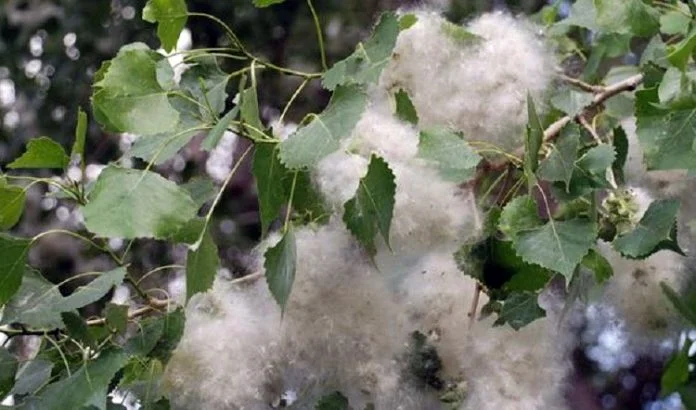
Over the past few weeks, large quantities of white fluffy pollen have been seen floating through the air and accumulating along roadsides, parks, schools and residential colonies in Srinagar and other parts of the Valley. While the sight may appear harmless to some, many residents say the pollen causes breathing difficulties, allergies, throat irritation and eye infections, especially among children, elderly people and those already suffering from respiratory illnesses.
Locals from areas including Bemina, Hyderpora, Chanapora, Rawalpora, Sahri-e-Khass and parts of Budgam and Ganderbal said the problem intensifies every spring, making daily life difficult for many families.
“We cannot even sit comfortably inside our homes without shutting doors and windows,” said a resident of Srinagar’s Bemina area. “The fluff enters rooms, settles on furniture and creates constant sneezing and irritation. Every year we complain, but no serious action is visible on the ground.”
Another resident from Hyderpora said children are among the worst affected. “My son has developed allergy symptoms during the last few days. Doctors advised us to avoid outdoor exposure, but how long can children remain indoors?” he asked.
Hospitals and clinics in Srinagar have also witnessed an increase in patients reporting seasonal allergy-related symptoms. Doctors say while the fluffy seeds themselves may not be directly toxic, they often carry dust particles and allergens that can trigger respiratory complications in sensitive individuals.
A senior doctor at a government hospital in Srinagar said cases of nasal allergies, coughing, throat irritation and asthma-related problems generally rise during this season. “Patients with asthma or respiratory sensitivities should take precautions, use masks outdoors and avoid unnecessary exposure during windy hours,” the doctor advised.
Environmental experts believe the problem is linked to the large-scale plantation of Russian poplar trees in Kashmir decades ago. The species was introduced primarily for commercial and timber purposes because of its rapid growth. However, experts now say insufficient planning regarding its long-term environmental and health effects has contributed to the current situation.
Experts have also pointed out that female Russian poplar trees release the cotton-like fluff carrying seeds during spring, leading to widespread public discomfort. They stress the need for scientific management rather than unplanned cutting of trees.
“There has to be a balanced approach,” said an environmental researcher in Srinagar. “We cannot support indiscriminate deforestation, but authorities should gradually replace problematic trees in densely populated areas with native and low-allergen species.”
Residents alleged that despite repeated complaints and public discussions over the years, government departments have failed to implement any effective long-term solution. Many people said the administration only issues advisories during the pollen season while the actual problem remains unresolved.
Locals are now demanding a coordinated response from the administration, including scientific surveys, selective removal of female Russian poplar trees and increased plantation of environmentally suitable alternatives.
Officials from the concerned departments have earlier stated that awareness drives and management plans were under consideration, but many residents feel the response has been too slow compared to the scale of the problem.
As the pollen continues to blanket several parts of Kashmir, public frustration is growing. Residents say what was once viewed as a minor seasonal inconvenience has now evolved into a serious public health concern that requires immediate and practical intervention from the authorities before future seasons become even more difficult for the people of the Valley.